"You shall know the truth, and the truth shall make you odd." ~Flannery O'Connor

Sunday, November 27, 2005

My Advent rant


Today is the First Sunday of Advent and thus the first day of the new liturgical year. For explanation and resources, I recommend CatholicCulture.org's page on the subject. But here I want to say something I've been wanting to say in public for a long time.

American Christians, most Catholics included, don't know how to celebrate Advent anymore. They don't even know what it is. For them, it's "the Christmas season," that time of mandatory jollity and expense that the unfortunate dread as much as the fortunate welcome. What used to be called "insane asylums," and are now called "behavioral-health units," get very busy this time of year.

The kickoff is Black Friday, the day after Thanksgiving, when the malls open during the wee hours to accommodate the biggest shopping day of the year. Yet, for residually spiritual reasons, this is also supposed to be a time when families get closer and good will more actively expressed to all. The gift-buying and parties were once meant to subserve that; now, they just as often spoil it. I couldn't believe it when the local oldies radio station, to which I sometimes listen out of nostalgia for my youth, went to an all-holiday-music format the week before Thanksgiving. Of course I can't listen to that: it only reminds me that the merchants have taken over with our full connivance. For most people, this Sunday is now just one more shopping day. The pressure is on, after all.

In 1991, the year I actually owned a house, I enjoyed annoying my neighbors by refusing to mount Christmas decorations until Christmas Eve and then refusing to take them down until Epiphany. That is because the Christmas season consists of twelve days, starting on...uh, Christmas. But "the twelve days of Christmas"—remembered by most only in the form of a song first composed as underground catechesis-in-code—are now mostly a time of winding down, in which people process the detritus of what they take to be the Christmas now past: the dead evergreen trees, the packaging and wrappings, the credit-card bills they would rather not view. It's a depressing time relieved only by the socially-sanctioned opportunity to get drunk on New Year's Eve and sleep in on New Year's Day. But then there's that hangover on New Year's Day: a great day to make resolutions one won't keep....

It's better to treat Advent as a time of contemplation and fasting, heightening our sense that God first visibly entered our lives as a baby, sharing our vulnerability, just as he later did on the Cross. God does not make life better by zapping all the bad stuff; he makes it better by being fully present to us amidst the bad stuff. If we spent more time praying and thinking about that, and less time buying and drinking, perhaps this wouldn't be called "the crazy season."

Saturday, November 26, 2005

Law's Quandary and Justice Scalia

Stephen D. Smith's Law's Quandary (LQ) is the sort of costly, scholarly book I used to read when I was in academia but is now a luxury I cannot afford. If I read it at all, I'll have to wait for some university library in central North Carolina to acquire it, and then drive to it. That would be a day in my life, which I don't often have open; I've done that only three times in the last ten years. In many such cases as this, I hope instead to encounter a reliable review in lieu of the book so that I can at least get acquainted with the most substantive issues. That hope is too often vain; but not this time. I am as relieved as delighted to engage with Justice Antonin Scalia's trenchant review of LQ in the November issue of First Things. That my favorite jurist is reviewing such an important book in my favorite journal is a rare treat indeed.

As quoted by Scalia, Smith frames law's quandary thus:

Since at least the time of Holmes, lawyers and legal thinkers have scoffed at the notion that “the law” exists in any substantial sense or that it is not reducible into our discourse and practices. Law is not a “brooding omnipresence in the sky.” We have rejected any such conception of law . . . because we perceive, correctly, that our ontological inventories (or at least those that prevail in most public and academic settings) could not provide any intelligible account of . . . this “preexisting thing called ‘The Law.’” At the same time . . . [there is] cogent evidence suggesting that we still do believe in “the law.” . . . Our actual practices seem pervasively to presuppose some such law: our practices at least potentially might make sense on the assumption that such a law exists, and they look puzzling or awkward or embarrassing without the assumption.
Like Scalia, I shall assume that such a description is true. "We," meaning contemporary Americans who think seriously about the philosophy of law, believe implicitly in something called "The Law." That belief is what drives all forms of judicial activism. But the prevailing legal positivism cannot give an adequate account of what "The Law" is and indeed rules out even trying. Since both Scalia and Smith well explain why that is so, I shall take for granted the existence of such a quandary. The interesting question is whether we must live with it rather than think as necessary to resolve it.

Scalia argues, in effect, that the only alternatives to the quandary are complete "textualism" on the one hand and the sort of ethical monotheism that forms the historical context for natural-law theory on the other. In other words, we can either be really, really strict "originalists" or we can be natural lawyers in the classical sense alluded to in the Declaration of Independence ("the laws of nature and of nature's God"). Refusing both alternatives—which is now the norm on faculties of law—leaves us unable to explain a belief that the profession is as unwilling to abandon in practice as to acknowledge in theory. Our choices thus are three: (a) originalism; (b) religion; (c) incoherent arbitrariness.

Most American jurists embrace (c), the core of the quandary, not because they like it but because they dislike (a) and (b) more. In that respect, they are hardly unique or even disturbing: for example, most Americans rightly find our health-care system too costly, unwieldy, and exclusionary; but it stays pretty much as is because just as many people dislike the alternatives even more. So we keep paying and paying: health-care costs consistently rise at a rate well above that of general inflation even as more and more Americans become unable to afford the care they need. In the long run, that is politically as well as economically unsustainable; and the same goes for the spiritual cost of the jurists' incoherent arbitrariness. The very people who ought to be most keenly aware and solicitous of the philosophical basis of the Republic refuse on principle to acknowledge it. How long can the Republic last amid such a quandary?

The evidence of breakdown is becoming ever clearer. Freedom of religion has come increasingly to mean what it never used to mean: the exclusion of religious values and expressions from public life, even as most Americans believe in a Higher Power and most of them in the God of ethical monotheism. Similarly for the right to privacy: freedom from government intrusion into the home without due process has come to mean the right to determine for oneself whether to count unborn children as persons with a right to live or not. Yet nowadays nobody would find it acceptable to let rich people decide whether their black employees are human beings, and thus have a right to be paid, or not. Remember slavery? The Supreme Court upheld it, asserting that, constitutionally, a slave counted only as three-fifths of a person; whereupon Americans fought a hugely bloody war over slavery whose result made Dred Scott a dead letter. Today, the main casualties of being defined into non-personhood are too small and voiceless to vote. Those who strive to defend them are dismissed as "religious extremists." Somehow it's forgotten that the abolitionists were too.

Want more examples? Civil marriage now consists in a an open-ended contract severable by the will of one party, regardless of the other's will. When children are involved, that party is usually the woman; so now, in most states, family law has come to consist more and more in a set of rules for replacing fathers with money. For you uninitiates, that money is called "child support." It is extracted on pain of jail; as a result, not a few honest men can and do serve jail time if they are unfortunate enough to lose their jobs. Thanks to the legal fiction of "no-fault" divorce, debtor's prison, which many of our forefathers came to these shores to escape, has returned with enthusiastic public backing.

Indeed, many men without any history of criminal behavior now live literally under the gun—and I'm not even going to get going on domestic-violence restraining orders, whose legitimate purpose as originally conceived is now routinely abused to preordain custody decisions when no evidence of physical violence has been presented. Only a few father's-rights activists, dismissed of course as "extremists," seem to think all this unconstitutional—never mind the staggering social costs, which go hand in hand with the cost of all the other things I've cited, and more things I haven't. Needless to say, the people most directly responsible for maintaining such a regime either cannot or will not come to grips with the true costs. It is now fashionable to lament the psychological and economic costs of "father absence;" but many who do so continue, knees jerking, to support policies that facilitate it and sometimes even mandate it. Family life in this country has become increasing fragile and chaotic with the full support of people who ought to know better.

I am astounded that people who are nowadays brave and honest enough to call themselves "feminists" believe that laws severely restricting abortion would be unconstitutional infringements of privacy but that, at the same time, dragging a man from his home and off to jail on the basis of an unsusubstantiated accusation, only to be informed at a hearing that he no longer has the right to associate with or even contact his wife and children, is not such an infringement. That is what happened to two men of my acquaintance during the last two years. Neither had any criminal record, and neither was ever charged with a crime. They just served the 48 hours in jail mandated by state law in these cases. Cognitive dissonance, anyone? That such Kafkaesque, ideological absurdity is now enshrined in our laws is possible because we are forgetting The Law to which laws must conform.

So what is to be done? Originalism—at least in the non-threatening "texualist" form entertained by Smith—is pretty much out. Hardly anybody—left or right, secular or religious—wants judges to limit themselves at all times to "the intent of the framers." A good reason for that is that it's unclear whether such a thing is even relevantly ascertainable in the most interesting cases. Smith gamely argues that it is, claiming that the meaning of a given form of words consists merely in what its author or speaker intends. But philosophically that view is untenable, and Scalia has great fun demolishing it. So that leaves us with (b): religion.

Thus Scalia concludes:
As one reaches the end of the book, after reading Vining’s just-short-of-theological imaginings followed by Smith’s acknowledgment of “richer realities and greater powers in the universe,” he (she?) is sorely tempted to leap up and cry out, “Say it, man! Say it! Say the G-word! G-G-G-G-God!” Surely even academics can accept, as a hypothetical author, a hypothetical God! Textualists, being content with a “modest” judicial role, do not have to call in the Almighty to eliminate their philosophical confusion. But Smith may be right that a more ambitious judicial approach demands what might be called a deus ex hypothesi.
Will jurists have the courage and honesty to embrace the hypothesis of God? I doubt it: not even with four Catholics now on the Supreme Court and one awaiting confirmation. Most American Catholics are more reflexively American than Catholic; when the two conflict, the former usually wins. If I were a lawyer, that's what I'd want to spend my time trying to change. But then I'd be as poor as I was while a graduate student—after deducting for child support, of course.

Why relativism is a dictatorship


As Dean of the College of Cardinals a few days before his election as Pope Benedict XVI, Joseph Ratzinger gave a homily to his assembled colleagues in which he asserted:

Having a clear faith, based on the Creed of the Church, is often labeled today as a fundamentalism. Whereas, relativism, which is letting oneself be tossed and “swept along by every wind of teaching”, looks like the only attitude acceptable to today’s standards. We are moving towards a dictatorship of relativism which does not recognize anything as for certain and which has as its highest goal one’s own ego and one’s own desires.
As an American with two Ivy League degrees and experience in quite varied settings, I find that prognosis pretty obviously true. And I have been pleasantly surprised by the extent to which Church leaders have accepted it. But of course there is dissent. The most interesting I've come across to date is from the Italian Catholic philosopher Dario Antiseri (pictured), whose orthodoxy and resumé both seem unimpeachable. His argument is worth rebutting.

His thesis is that relativism, properly understood, is the antidote to idolatry. As such, it is a vital service to God's people rather than an attack on their faith: "a spy in the service of the Most High," in the words of the article's title. Now as I read the article, which I urge you the reader to do too, I quickly saw that once the premise be granted, the conclusion does indeed follow. So I want to focus on the premise: what does Antiseri define as relativism?

What's mostly at issue is moral or ethical relativism. Antiseri rejects Ratzinger's characterization of that stance as quoted above. Of course nobody disputes the fact of pluralism in ethics and all other philosophical matters; the question is what conclusion is to be drawn from it. Here is the kernel of Antiseri's answer:

But once we have established that ethical conceptions are different, the next, inevitable question is the following: do we have available to us a rational criterion, one that is valid for all, according to which we can decide which ethics is best in that it is rationally founded? A question of that kind, the nucleus of every ethical theory, cannot find a positive response if "Hume's law" holds true. Hume's law tells us that prescriptions cannot logically be derived from descriptions, with the consequence that the basic values of an ethical system, the fundamental ethical principles, are in the final analysis founded upon each person's choices of conscience, and not on arguments of a rational nature.
If that argument is correct, then from the fact that one cannot derive an "ought-statement" from an "is-statement," it follows that our "fundamental ethical principles" cannot be based on rational arguments but rather on "choices of conscience." Relativism, then, is merely the acknowledgment of the logical force of Hume's law and the conclusion Antiseri thinks follows from that law.

Moreover, if relativism so defined were true, then it would have exactly the further consequences that Antiseri so eloquently describes. It would be the indispensable basis not only of democratic government and religious toleration, but also and especially of our ability to receive divine revelation as something from outside and above us, binding us willy-nilly, rather than as a product of our own limited, fallible reason. So understood, relativism is win-win all around: it allays the secularist fear of fundamentalism even as it prevents believers from confusing their own ideas with God's and thus falling into idolatry.

The problem with Antiseri's approach is that his central inference is subtly invalid. From the fact, if it is a fact, that one cannot derive 'ought' from 'is', it does indeed follow that one cannot fashion one's "fundamental ethical principles" by reason alone. The notion that man, by reason or any other means, can set up such principles for himself is the basic error of all forms of secular totalitarianism as well as of easy, undergraduate relativism. But it does not follow that our "choices in conscience" of such principles are non-rational. The very widespread belief that such does follow is indeed the premise of today's "dictatorship of relativism." But it is not true. Given the subject matter, one can find reasons for acknowledging what one's reason does not establish. What's fitting, indeed indispensable, as a precondition of sound moral reasoning is not thereby either established by reason or outside the realm of reason. It's a given. And it is supremely rational to acknowledge it as a given.

Now the question: "A given of what?"—God, nature, both, or something else—is indeed worth debating. I believe that, as expounded by Thomas Aquinas, theistic natural-law theory is the best way to answer that question philosophically. And I'm sure the Pope would agree. But that, though my rational preference, is not my main point against Antiseri, which is that such a given is neither irrationally given nor irrationally chosen. It cannot, to be sure, be rationally demonstrated. But that doesn't make it arbitrary or in any other sense non-rational. What cannot be demonstrated as a matter of deductive necessity is not thereby illogical. It may itself be necessary as a set of premises for sound reasoning.

Of course there remains the matter of ethical "pluralism." The question how to account for ethical pluralism, both across cultures and among thinkers within a given culture, is well worth discussing and has been amply discussed. If anybody thinks that giving such an account is a problem for Ratzinger and his defenders, I'm willing to adumbrate one in response to specific objections. All I'll say here is that the values Antiseri wishes to preserve—popular self-government, religous toleration, approprate humility before God and each other in face of our various differences and blindnesses—can and ought to be preserved on the kind of "absolutist" morality Ratzinger defends.

For further reading, I recommend Aquinas' Treatise on Law (Summa Theologiae I-II, Q. 90-106) and CS Lewis' The Abolition of Man.

Thursday, November 24, 2005

Giving thanks

It is said that the colors assumed by leaves in the fall, before they die and fall off the tree, are their real, underlying colors. Green is the color they assume while doing their natural work of producing cholorophyll. Such facts of nature serve as a good reminder of what today's feast is about.

The origins of Thanksgiving lie in the harvest. God-fearing people gave thanks to God for it as they enjoyed its fruits and settled in for the winter. Having exhausted themselves by "doing" in cooperation with God, thus showing their "green," they were now forced into the mode of just "being," thus showing who they really are. In such a process, action gives way to contemplation. That is a kind of death, but it is also a prelude to new life. The approach of winter is the time of Advent, when we await God's coming as a little child and the cycle of life is heralded anew. For all of that, gratitude was surely in order.

In the days when most people worked the land, it was easier to appreciate the coincidence of Nature's rhythms with those of the Spirit. The former were sacramental: a sign and instrument of the latter. But for most of us today, in America, the message needs to become more spiritually explicit so that it can be more voluntarily heeded.

The "attitude of gratitude" is vital for spiritual health. The hard part is cultivating it in bad times as well as good. Farmers are often forced to do that for the sake of mental as well as spiritual heath. But of course none of us are naturally inclined to do it. I find I can do it only when I trust completely that "blessed are the poor in spirit," that the resurrection will follow the cross if we bear the cross as God himself did for us.

As Advent approaches, let us be mindful of the need to become like little children, as God the Son did at Christmas, trusting our heavenly Father even when our suffering is undeserved and we don't at all see how it's "good" for us. And let us not forget the many blessings that we don't deserve either. This life is not about justice, which will only be done fully in the next. It is about the exchange of gifts. At the end of the day, especially today, it is about giving ourselves completely to each other and to God in response to his having given himself to us.

Tuesday, November 22, 2005

THAT document has been leaked!


Of course. Somebody in the Vatican has slipped to the news agency Adista (the Italian counterpart of the National Catholic Reporter, so not quite as decorous) the text of the new Instruction on THE CRITERIA OF VOCATIONAL DISCERNMENT REGARDING PERSONS WITH HOMOSEXUAL TENDENCIES IN VIEW OF THEIR ADMISSION TO SEMINARIES AND HOLY ORDERS. (Click here for the PDF in Italian.) The explosive topic of homosexuality in the priesthood, on which I've written several times before, invites this classic case of Romanità: testing the waters by leaking the truth prematurely while maintaining plausible deniability. Nonetheless, the text and the unofficial translation by Robert Mickens seem authentic. (Biretta tip to Rocco at Whispers in the Loggia for posting the latter.)

On that supposition, I must say I am pleased. Issued with the Pope's formal approval by the Congregation for Catholic Education, the instruction sets forth a most salient and needed pastoral rule. Having reiterated the CCC's distinction between homosexual acts, which are "intrinsically" disordered, and homosexual inclinations, which are "objectively" disordered, the instruction continues (emphasis added).

In the light of such teaching, this Dicastery, together with the Congregation for Divine Worship and the Discipline of the Sacraments, deems it necessary to clearly affirm that the Church, even while deeply respecting the persons in question, cannot admit to seminary or Holy Orders those who are actively homosexual, have deep-seated homosexual tendencies, or support the so-called gay culture.

That, in essence, is what's been expected for months. I myself have hammered away at the theme—which ought to be obvious, given Church teaching—that those who support the homosexual subculture should not be ordained even if they are perfectly continent themselves. But two evident qualifiers will allow the Church's defenders to rebut the usual charges of homophobia and unjust discrimination.

One is that not every man who has experienced same-sex attraction in the past, or even acted on it sexually in the past, is ipso facto excluded. Thus: When dealing, instead, with homosexual tendencies that might only be a manifestation of a transitory problem, as, for example, delayed adolescence, these must be clearly overcome at least three years before diaconal Ordination. That is most important. It shows that the Vatican's concern is not to punish people who have had a problem in their pasts but to keep out of priestly ministry those who still have the problem or, worse, don't think it really is a problem.

The other qualifier is implicit in the phrase who support the so-called gay culture. It should be noted that such a category includes some straights as well as many gays. Straights who support the gay culture—one whose premises, after all, are incompatible with the teaching of the Church—should no more be ordained than gays who support the gay culture. And the same holds, or should hold, across the board: men who do not accept the constant and irreformable teaching of the Church on whatever topic should not be ordained to the priesthood.

None of this is going to be popular with the secular media or the wider world whose values are shaped and reflected by the secular media. Nor, I'm afraid, will it be much more popular in many chanceries, where passive resistance to Roman directives is habitual and, in some cases, the Lavender Mafia still actually rules. But if bishops and religious superiors actually follow this Instruction's norms, there will be much improvement.

If, if, if... As I have repeated in many contexts before this one, the main problem with reforming the clergy is that reforming the clergy is mostly up to the clergy. As a layman I understand the difficulty of getting ordinary Catholics to believe what the Church teaches and at least strive to act accordingly. But the problem is soluble with a clergy that actually believes what the Church teaches about the truly controversial topics. The difficulty of getting enough clergy like that is one that I have a very hard time understanding and, as a layman, can do rather little about. Perhaps the Pope and his men can do more with messages like that of this new instruction.

What it comes down to is that the Chaputs must prevail over the Mahonys.

Monday, November 21, 2005

My meme confession

OK, it's starting. My fellow Catholic bloggers Barbara Nicolosi and Amy Welborn are now "confessing" the sorts of things one can get away with confessing for all and sundry to read. I want to get on this train before it pulls completely out of the station.

I confess:

I find confession more attractive when celebrities go in for it. (See, e.g., above.)

Almost any image of Catherine Zeta-Jones gives me more pleasure than almost any image of the Blessed Virgin.

It's best to admit it: I envy Michael Douglas. He's a neighbor whose wife and goods, both, I covet.

No matter what I read or tell myself, I can't get through more than two decades of the Rosary without counting how many Hail Mary's are left to recite for that session.

I don't handle money well because I'd rather not think about it.

I'd rather not think about money because doing so reminds me how little of it I have.

I dislike being reminded of my poverty not so much because I can't help feeling that some people are right to suggest that I am culpable for it, but more that their reasons for so thinking make me angry with them.

I allow myself to joke that I earn money at jobs for which qualifications don't matter only because I'm overqualified for almost any job for which qualifications do matter.

I don't lead a healthy lifestyle because I am confident that God will keep my health all-but-perfect until I no longer have to pay child support. Really.

I can't help thinking ill of lawyers, even and especially if they're Catholic.

Thinking of fasting as weight control (the latter as an added bonus, of course) makes it easier for me to fast.

I am discouraged by the fact that many of the people I pray and fast for don't know it and wouldn't care if they did.

I believe I'd be a better president of the United States than the President; worse, I believe it lessens my pride and stupidity to note that many people feel the same about themselves.

I get a jolt of joy when I hear that our troops have killed an al-Qaeda commander.

I'm convinced that my intelligence, ethnicity, and religious background are similar enough to Madonna's to enable me to influence her if I could just talk to her. Yes, that is a thought to confess and repent of.

I once thought I'd make a good priest.

I still daydream about being pope.

Sunday, November 20, 2005

Back for Christ the King

Apologies to my vast readership for the two-week hiatus. My work schedule has changed so that I've had to reverse my body clock. I was left a zombie for about ten days, which was fine for a job that doesn't even require a high-school diploma but won't do for serious mental work. Then my wireless-network card died. But now that the old bod and the new card are in good working order, I'm back with another homilette.

Today's feast marks the end of the liturgical year. It is fitting that Pope Pius XI established this feast for that purpose at a time in history when the rule of God over humanity was being so radically rejected by totalitarianism and other forms of secularism. That struggle is murkier today with Nazism dead, Communism in retreat, and radical Islam ascendant. But in the West, especially in Western Europe, the pretense remains widespread that man can successfully define the good for himself, both collectively and individually, without reference to the Creator. Today's feast and readings remind us that, at the end of the age if not of the day, that pretense will be utterly shattered along with all temporal regimes.

Whether one fears or welcomes that is a good measure of what one's fate will be.

Sunday, November 06, 2005

Spiritual oil supplies

Today's Gospel (Matthew 25:1-13) struck a deep chord with me, and the frustrated clergyman in me wants it to do the same with others. Here's why I think it should.

According to the Jerusalem Talmud (Yoma 43:3), the perpetually oil-lit lamps of the Menorah in the Temple all went out of their own accord about forty years before the Temple's destruction by the Roman in 70 CE, with the death of one "Simeon the Righteous." That makes it contemporaneous with the earthly life of Jesus if not with his ministry itself. It may well be that said Simeon is the man described in Luke 2 as the one who felt free to die now that God's promise to him had been fulfilled by his seeing the (then-infant) Messiah. But even if they aren't the same man, the theme of oil and lamps is the same as that of the parable Jesus tells in today's Gospel and reminds us of his message's urgency.

The English metaphor: "keeping a candle lit" is used as a way of saying that a person keeps alive in their heart the hope that their beloved will return (even when, as is often the case in foiled romance, the hope is unrealistic). Jesus uses the metaphor of the virgins' oil lamps for essentially the same purpose, with himself as Bridegroom being the one eagerly awaited and the virgins being the bridesmaids at his wedding with his Bride, the Church. But the lamps are supposed to be lit, not tossed aside, when the Bridegroom comes. Why? Because the oil, a sign of the Holy Spirit's anointing of the chosen, thus and also signifies grace: one's participation in the divine life. Only if one has the oil, the grace, which is life in the Spirit, can one be adequately prepared to receive and celebrate the consummation of God's love for his people. If, like the foolish virgins, one runs out of oil while awaiting the Bridegroom, one might well find that he arrives while one has run off to obtain more. In other words, only if one takes care to persevere in the divine life Jesus wins for us by his death and resurrection can one expect to join that eternal wedding known as heaven. (Better than sex, which is only a foretaste.) One cannot wander off into sin and be confident of fixing things before one meets one's Maker.

Now Matthew was writing for an essentially Jewish-Christian audience after the Temple's destruction. His inclusion of this parable thus intimates to his audience that the Menorah went out because the Jews were not ready to receive their Messiah. But such a conclusion, inevitable as it is, should not tell us that the Jews as a whole are any worse than Christians as a whole. They are not.

The history of the Jewish people, from Day One of God's covenant with them, has always seemed to me a living metaphor for that of humanity's relationship with God, both individually and collectively. It helps to make real what it thus signifies. One thing thus signified is that, in our lives as individual believers, we can make an idol of religion that closes us to the purpose of religion: i.e., our becoming by adoption what God is by nature. But we don't get it; we think mostly in worldly categories. Since Jesus was not the military and political Messiah the Jews expected, most rejected him; unfortunately, the same holds in each of our lives as Christians. We often ignore the Spirit's gentle promptings and become more like the rest of the world than like the one we ritually call "Lord." We let our oil run out and thus run the risk of appearing before our Maker clutching at nothing to celebrate with.

I know I've done that many times in my life. We all do, for we are sinners in constant need of repentance and renewal. That's why church is such a scandal for so many, so chock full of "hypocrites," as it surely is. But it shouldn't be a scandal: if you find a perfect church, join it and it won't be perfect anymore. The work should begin with ourselves. We need to pay whatever we must for our oil and keep our lamps perpetually lit.

Saturday, November 05, 2005

Anthropology, not anthropologists

Leave aside all the sneering about ivory towers. It seems fair to say that, in the West at least, the most contentious moral issues are really metaphysical: what is the human person and their place in the scheme of things? Among educated Europeans, exploration of that question is called philosophical anthropology, to be distinguished from the social science of the same name, which latter is how the term is typically understood in English-speaking countries. Again from a Western perspective, only two basic sets of answers are really in play: the theistic and the secular. The former is in eclipse in Western Europe even as it is still the default position among Americans. But the supervenient moral questions are still controversial. Indeed, they define the clash between what John Paul the Great called "the culture of life" and "the culture of death."

Consider this passage from The Conservative Philosopher:

There is a tendency in recent philosophy to assume that moral reasoning can be carried on more or less in isolation from controversial issues in metaphysics. The assumption is that questions about justice, rights, virtue, and vice can largely be settled independently of questions about, say, the nature of the mind and its relationship to the body, personal identity, or even the existence of God. Liberalism encourages this attitude, since it seeks a conception of justice that is “neutral” between competing religious and philosophical worldviews, and thus assumes that such a conception is out there waiting to be found. The motive for such a view is obvious: metaphysical questions are often so contentious and difficult to settle that it would be nice if we could get on in our practical affairs without having to settle them. It would be nice, that is to say, if we could decide what to believe about matters of right and wrong without having to decide what to believe about questions concerning the nature of ultimate reality.

There is one problem with the view, however: it is manifestly false. Indeed, it is so blindingly obvious that it is false that it is a marvel that anyone takes it seriously.

Consider the controversies over abortion and euthanasia. If you take a broadly Lockean view of personal identity, you are likely to hold that what is essential to being a person is the having of a fairly rich stream of conscious experiences linked by memory and other psychological factors; and if you follow most contemporary philosophers in the ways in which they would amend Locke's own account, you are likely to add that the having of various desires, preferences, and the like, and the capacity to make rational plans on the basis of those desires and preferences, are also crucial. In that case, though, you are likely at least to take seriously the suggestion that fetuses and people like Terri Schiavo do not count as "persons" and thus lack a right to life.

On the other hand, if you take a broadly Aristotelian-Thomistic view of personal identity, you are going to regard a human person as a composite of soul and body, where 'soul' means, not the mysterious gassy, ghostly sort of thing most secularists assume religious people mean when they talk about the soul, but rather the form of a living body, in Aristotle's technical sense of the term 'form'. The soul-body relationship, that is to say, is on this view just an instance of the general form-matter relationship common throughout the natural world. Now, since on this sort of view—which is, incidentally, based entirely on philosophical arguments, and not on an appeal to "faith" or revelation—anything that counts as a living human individual must, as a matter of metaphysical necessity, have a human soul (that is, the form of a living human body), it follows that there is no mystery about when the soul enters the body: it is present from the moment the body itself comes into existence. And if you add to this considerations drawn from modern biology, it is at the very least plausible (indeed, many contemporary Thomists would argue, certain) that that body comes into being at conception. It would follow, then, that the human person comes into being at conception and thus has the right to life from conception—and continues to have that right (at least if he or she is innocent of any grave offense that would constitute a forfeiture of that right) until natural death, since while the body is alive the soul is necessarily present, and thus a person is necessarily present. On this sort of view, it is an error to say that fetuses are only potentially persons; rather, they are persons who have not realized their potentials. It is also an error to say that Terri Schiavo, people in comas, and the like have lost their status as persons; rather, they are persons who have lost their ability to carry out their normal functions.

Now the point isn't to try to settle here the dispute between such competing views. It is rather to point out that it is obvious that this difference in metaphysical views entails a radical difference in attitudes about fundamental moral and political questions. The difference runs so deep that there is no way that adherents of the rival views could possibly come to any agreement about how to deal with the contentious moral and political issues in question without one of them abandoning his metaphysical position.

I said the same thing when I taught ethics years ago and usually convinced my students of it. The same goes for embryonic stem-cell research and the cloning of human beings, when the latter becomes truly feasible. I called the account of personhood militating against abortion and euthanasia the substantialist account, and the opposite the functionalist account.

That distinction explains something that I observed a generation ago and used to puzzle me: animal-rights activists often favor abortion-on-demand. They are functionalists, which means that what they consider morally significant is not what something or somebody is but rather what level of functioning the entity in question exhibits. A well-functioning adult lemur monkey is thus of greater moral worth than even a fairly well-developed human fetus. That is why a philosopher such as Peter Singer of Princeton has no qualms about infanticide but would be outraged if anybody suggested his dog be sold to the Chinese for meat.

But of course the issues are much wider than that. Indeed the future of our civilization depends on how we deal with them collectively. Theists generally maintain that morality depends on what we are as creatures of God; secularists, on the relative value of this or that sort of life from a human viewpoint. Indeed, secularists are generally moral relativists: what's right and wrong is a function not of the divine will as expressed in the nature of the human person and their place in God's scheme, but of a given life's relative fitness or lack thereof for attaining such ends as this or that collectivity of people happen to have. Scientific anthropologists, like most academicians, are typically secularist and relativistic. Philosophical anthropologists, by contrast, toe no party line; but they all see that the question of man is philosophical and religious, so that it cannot be effectively answered by natural science. The debate between the culture of death and the culture of life is really about such questions. Epigramatically, it's a debate between those who do, and those who do not, think there's a vital distinction between what's worthwhile period and immutably and what's worthwhile to us at some places and times but not others. Only our comfortable and already relativistic élites can pretend that the debate is ultimately about anything else.

I sometimes think it's natural for them to so pretend. Predicating social and political arrangements on answers to metaphysical and even theological questions would upset too many applecarts. That's why they prefer to deal with the most contentious issues without such answers. But that, at bottom, is the same problem I described on Halloween. The culture of death may end up killing us out of the sheer sloth of our best and brightest.

Thursday, November 03, 2005

The burka and the bikini

Not coincidentally, the theme of this post explains why I've chosen not to display images of those notorious female garments. I had thought about doing so until I realized that, by depicting the sins involved, I'd be encouraging them. And what are those sins?

As Old Oligarch points out (hat tip to Jeff Miller for citing it on his own better-known blog):
The burqa and the bikini are polar extremes of the same fundamental error. Both styles of clothing deny the human dignity of the wearer. Virtue is a mean between the extremes. The modest woman, the woman with self-respect, wears neither the ostentatious bikini nor the humiliating burqa. Both the bikini and the burqa deny our Christian belief in the equal spiritual dignity of man and woman. Both manners of dress encourage onlookers to view the woman as subordinate to men in one way or another.

The burqa denies the Christian belief in the equal spiritual dignity of a woman because it obscures her face, which is the gateway to the heart and to the mind. A woman in a burqa is not permitted to publicly manifest the visible features most proper to her nature as a rational and emotive being -- features which are the most proper to her as a human being. (Aristotle, for example, says that no animal has a prosopon, lit., a countenance, but only a man or a woman.) The bikini likewise denies her equal spiritual dignity because it places primary emphasis on her body, and in such a way that it encourages others to objectify her body as a sexual plaything, not as a temple of Holy Spirit or as a magnificent creature of goodly design.

Yes, I really mean a plaything. How so? Everyone who wants to, gets to enjoy it, regardless of their number, often in public, with no more personal involvement than the private satisfaction of one's own frivolous desire. That's a plaything. Indeed, some playthings are more jealously guarded.

That is not merely a measured moral insight well worth spreading. The fashion facts so sagely lamented symbolize, and reinforce by symbolizing, the two poles in the current war of the West with violent, Wahhabist Islam.

The latter's soldiers despise the loose sexual mores of the secular West, rightly sensing that the libertinism flows inevitably—if not logically—from the secularism. We in the West despise the puritanical intolerance of the Wahhabists, whose worldview motivates most of the "terrorism" against which America claims to be fighting a war. (The war is not so much against terrorism, of course, as against Muslim extremists who are simply using terror as a weapon.) They hate the bikini and enforce the burka when and where they can; we hate the burka and, while not exactly legislating the bikini, thrust it everybody's faces through advertising and the media. (The Western Europeans now seem to regard even that figleaf as purely optional: topless bathing is now the norm at many beaches, and nude bathing is rarely prosecuted even if not actively encouraged.) As indicated above, both sides are precisely wrong about the true nature and dignity of woman. To me, though, what's interesting about that is how it illustrates by contrast the fundamental truth of mere Christianity, which the Wahhabists reject as polytheistic and the secularists reject as fundamentalist.

No sensible account of the true nature and dignity of woman is available except that of Christianity as developed down to our day in Catholicism, Orthodoxy, and those branches of Protestantism that manage to retain most of what the former two traditions retain. If women are the equals of men in worth and dignity—which we in the West rightly take for granted—that is not because they are the same as men. Androgyny, like all spiritual errors, distorts the truth—in this case, the truth that the personhood of women and men is more fundamental any of their differences. But despite the fantasies of the seventies feminists and those nurtured on that ideology, the differences are ineradicable: the sexes together constitute the image of God, inasmuch as the division of the human race into them is a call to life-giving personal intercommunion. That is why the majority of people marry and the majority of the married bear children. The nuptial meaning of the human body, male and female, can be ignored or suppressed only at the cost of doing the same to what our personhood is ultimately for: union with the triune God, who is a communion of persons.

The bikini, and the attitudes it betrays, obscure that by arousing lust, i.e., the desire for sexual union with somebody one is not committed to love and has no intention of marrying. The burka, and the attitudes it betrays, obscure it by treating women as property to be protected, not as persons to interact with. Both objectify women and thus reinforce male domination. That is why women should not wear either one. Of course, in many sectors of Dar al-Islam, a woman may be raped, beaten, disowned, or killed for refusing to wear the burka; whereas no woman is similarly treated in the West for refusing to wear the bikini. We have the freedom to be right.

In this vale of tears, that also entails the freedom to be wrong. The wrongness of Islamic extremism we know about. But not enough of us realize what our problem is: as a society, we are no longer sure there's any objective good to be wrong about. Secular Westerners think the challenge of freedom is to invent rather than discover the values we are to live by. The Wahhabists are a lot nastier than that, to be sure; but they are not quite as wrong as that.

Wednesday, November 02, 2005

The holy souls


When I was a child in Catholic school, the nuns made much of praying for "the holy souls in purgatory." On this, their feastday, it was a ritual duty whose premises seemed terribly abstract even to me, young master of the catechism. We were being enjoined to do something for dead half-people we could not see; and even taking on faith that our prayers did them some good, we couldn't see that either. Indeed, it wasn't until I reached college age that I could see the point of purgatory at all. Now I don't know what I'd do without the hope of it. I'm rather dubious about my chances of making it straight to heaven, unless I die heroically as a martyr or saving lives— which of course would be too gratifying, which is why it probably won't happen. It's a lot harder to live for Christ, which we all must do, than to die for him, which relatively few are granted the privilege of doing.

Non-Catholics who think it important to be catholic—chiefly, the Orthodox and the Anglo-Catholics—object not so much to the idea of purgatory as to the fact that Rome has defined it as dogma (cf CCC 1031). In that respect it is like several other Catholic dogmas, not least of which is the dogma that the pope can define dogma unilaterally and infallibly. Protestants tend to shy away from it as unbiblical (which it isn't) and as an excuse for corruptions that Luther rightly castigated in the late-medieval Catholic Church (which indeed it once was). But I am more and more convinced that it's just—well, if not obvious, then at least quite congruent with Christian experience. In 1769 James Boswell had this exchange with Samuel Johnson:

"What do you think, Sir, of purgatory, as believed by the Roman Catholicks?"

"Why, Sir, it is a very harmless doctrine. They are of the opinion that the generality of mankind are neither so obstinately wicked as to deserve everlasting punishment, nor so good as to merit being admitted into the society of blessed spirits; and therefore that God is graciously pleased to allow a middle state, where they may be purified by certain degrees of suffering. You see, Sir, there is nothing unreasonable in this."

"But then, Sir, their Masses for the dead?"

"Why, Sir, if it be at once established that there are souls in purgatory, it is as proper to pray for them, as for our brethren of mankind who are yet in this life."

Indeed. Even if it does not occupy one's daily thoughts, purgatory reminds us that many of us halfway-decent folk die without having completed the spiritual growth for which we are meant. If one believes in an afterlife at all, the only real alternative to purgatory is reincarnation, which seems to me philosophically untenable inasmuch as it assumes that the soul is the person, not just the most important part of the person. Even so, the element of truth in the Hindu and Buddhist doctrine of reincarnation is the same as that in purgatory: we do not attain complete bliss until we have been purified for it. Obversely, I find it comforting to be assured by the authority of the Church that I can enter the next life definitively saved without yet being fit for the company of heaven. I also find it comforting to know that the dying to self I should be doing as part of living for Christ will be consummated later if it isn't sooner. But for that reason I don't think I'll be comfortable in purgatory. I'd want to be prayed out of it. And so I offer my prayers accordingly for those already there.

Tuesday, November 01, 2005

The Feast of All Saints

Why should our praise and glorification, or even the celebration of this feast day mean anything to the saints? What do they care about earthly honours when their heavenly Father honours them by fulfilling the faithful promise of the Son? What does our commendation mean to them? The saints have no need of honour from us; neither does our devotion add the slightest thing to what is theirs. Clearly, if we venerate their memory, it serves us, not them. But I tell you, when I think of them, I feel myself inflamed by a tremendous yearning.

Calling the saints to mind inspires, or rather arouses in us, above all else, a longing to enjoy their company, so desirable in itself. We long to share in the citizenship of heaven, to dwell with the spirits of the blessed, to join the assembly of patriarchs, the ranks of the prophets, the council of apostles, the great host of martyrs, the noble company of confessors and the choir of virgins. In short, we long to be united in happiness with all the saints. But our dispositions change. The Church of all the first followers of Christ awaits us, but we do nothing about it. The saints want us to be with them, and we are indifferent. The souls of the just await us, and we ignore them.


Come, brethren, let us at length spur ourselves on. We must rise again with Christ, we must seek the world which is above and set our mind on the things of heaven. Let us long for those who are longing for us, hasten to those who are waiting for us, and ask those who look for our coming to intercede for us. We should not only want to be with the saints, we should also hope to possess their happiness. While we desire to be in their company, we must also earnestly seek to share in their glory. Do not imagine that there is anything harmful in such an ambition as this; there is no danger in setting our hearts on such glory.

When we commemorate the saints we are inflamed with another yearning: that Christ our life may also appear to us as he appeared to them and that we may one day share in his glory. Until then we see him, not as he is, but as he became for our sake. He is our head, crowned, not with glory, but with the thorns of our sins. As members of that head, crowned with thorns, we should be ashamed to live in luxury; his purple robes are a mockery rather than an honour. When Christ comes again, his death shall no longer be proclaimed, and we shall know that we also have died, and that our life is hidden with him. The glorious head of the Church will appear and his glorified members will shine in splendour with him, when he forms this lowly body anew into such glory as belongs to himself, its head.

Therefore, we should aim at attaining this glory with a wholehearted and prudent desire. That we may rightly hope and strive for such blessedness, we must above all seek the prayers of the saints. Thus, what is beyond our own powers to obtain will be granted through their intercession.

—St. Bernard of Clairvaux

Monday, October 31, 2005

The creepiest horror


Since one nasty image per week is enough (OK, two, if you count Bishop Skylstad's visage), I include a more innocuous one for this Halloween post. That's just as well, because the images are hard to conjure and would be just as varied as individuals. Images of what? The scary stuff that's literally creeping up on us as a country.

I can only describe it by saying that an increasing number of Americans, perhaps even a majority by now, are convinced that it's all going to come crashing down on us before most of us are ready and while some of us are still, unfortunately, alive. "It" in this case is the American lifestyle and the "American dream" that putatively motivates it. Let's face it: the lifestyle of even the average American is unsustainable in the long run; and when the long run becomes the short run, the consequences will be horrific.

For one thing, we consistently spend and consume far more than we save and produce. We now depend on foreigners, largely Asian, to finance our budget and trade deficits. For another, only briefly could we be content with being, and acting as, the world's sole superpower. Now, as our military is already stretched to the limit, we confront not only violent Islamism but also a rising Chinese superpower and a European Union whose economy is already bigger than ours. Worse, our lifestyle depends not only on expanding debt and military superiority, neither of which are indefinitely sustainable, but on utilization of finite natural resources, chiefly oil and soil. Nobody knows when the world's oil will actually run out or become terribly expensive in virtue of demand and the difficulty of extraction; but it will someday, and sooner than most people will be prepared for. Nobody knows when the types of farming we do will exhaust the land; but someday they will, unless our methods and expectations change radically. In the meantime we are fatter than ever even as health care consumes an ever-growing portion of our Gross Domestic Product (last I read, it was 15% and climbing). We are engorged with materialism and the desire for a pain-free existence, like an overfed doe standing in the middle of the highway at night, oblivious to the speed and confused by the lights of the approaching danger.

The collision between dumb habit and harsh reality may come relatively suddenly, with a quick succession of wars and/or natural disasters; or we may just be ground into despair and chaos as everything becomes steadily more expensive and less secure. Probably some combination of all the above and then some. Nobody knows and it doesn't really matter. The truly creepy thing about all this is what the redoubtable Peggy Noonan recently pointed out: many of our smartest people know what's down the road and yet choose to do nothing about it, save to practice the high-tech equivalent of hunkering down in their nests. They can only "eat, drink, and be merry"—for tomorrow they will die, and it will only be their children or grandchildren who die sooner with less merriness beforehand. Business as usual is a lot less costly, now, than the effort to reform now—less costly even than the moral courage to make the dire necessity of reform as clear to everybody as it is to the cranks and killjoys we always have with us.

Noonan, of course, suggests that the heedlessness is due to helplessness: since nobody knows what to do to stop the coming trainwreck, they figure thay might as well get the gusto while they can. People do feel helpless, but I believe that sense is itself a sign of something spiritually deadly: what the Fathers and Doctors of the Church called acedia or the deadly sin of "sloth."

Coming from a family genetically prone to depression and anxiety, I have had to wrestle with this sin, sorely if only periodically, since puberty. 'Sloth' here does not primarily mean laziness, though it often causes lassitude; in essence, sloth is the deadly sin of yielding to the desire to give up. It is a refusal to engage reality at its core, and as such is both a cause and a consequence of despair. It's hard to measure moral responsibility for sloth in individuals inasmuch as it often results from clinical depression, which in turn involves bad brain chemistry whose persistence is not always caused or exacerbated by the effects of personal choices. But what we're dealing with in America today—at least among our élites—is the collective equivalent of sloth for which I believe the privileged are morally responsible. Those who "have" feel helpless because they are unwilling to make the sacrifices necessary to act, on their progeny's behalf, as reality calls for. One sign of that is that the birth rate for native-born Americans is now below replacement level—and the higher the income bracket, the lower the birth rate. Why sacrifice for progeny if one isn't even willing to replace oneself?

Which brings me round to another of my favorite themes: the contraceptive mentality. As sex gets steadily unmoored from procreation, people get more interested in the former and less in the latter. As lust accordingly displaces love, the marriage rate declines and the divorce rate keeps reaching new statistical peaks. That's what's happening in our society, and such is the clearest sign of the malady of our age. The desire to make self bigger, and sate it accordingly by reducing people and the earth to objects for untrammelled use, has become collectively so powerful that true love is seen as a mere ideal for the few fortunate enough not to have been made cynical by experience.

As Old Testament history has long since told us, only a big crash will make people humble enough to start over on a sounder footing. They will be "the faithful remnant." The crash will come and the remnant will respond as they should. That's the only reason I don't despair too. It's a story that's been told before. I suppose it's called 'faith'.

Sunday, October 30, 2005

An exorcist's perspective on the problem of evil

Rome's chief exorcist, Fr. Gabriele Amorth, has been at it a long, long time. It's safe to say that, among living Catholic priests, nobody knows more about the Devil. He has the full support of Pope Benedict XVI, who encouraged and approved an intensive course on the whole subject of demonology and exorcism now being given at the clerics-only Athenaeum Pontificium Regina Apostolorum. Fr. Amorth has presented some theological reflections well worth pondering. Emphases are in bold.

If we see everything in the light of the centrality of Christ, we can see God's plan, who created everything "for him and in expectation of him." And we can see the actions of Satan, the enemy, the tempter, the accuser. By means of his temptation, evil, pain, sin, and death entered the world. It is in this context that we are able to see the restoration of God's plan, which Christ accomplished at the cost of his blood.

In this context, we are made aware of the power of the devil. Jesus calls him "the prince of this world" (Jn 12:31, 14:30, 16:11). John affirms that "the whole world is in the power of the evil one" (1 Jn 5:19); by "the world" John means everything that is opposed to God. Satan was the brightest of the angels; he became the most evil of the devils and their chief. The demons remain bound to the same strict hierarchy that was given them when they were angels: principalities, thrones, dominions, and so on (Col 1:16). However, while the angels, whose chief is Michael, are bound by a hierarchy of love, the demons live under a rule of slavery.

We are also made aware of the action of Christ, who shattered the reign of Satan and established the kingdom of God. This is why the instances where Jesus freed those possessed by demons become particularly important. When Peter teaches Cornelius about Christ, he does not mention any miracle besides the fact that he cured "all those who had fallen under the power of the devil" (Acts 10:38). We understand, then, why the first authority that Jesus gave his apostles was the power to expel demons (Mt 10:1). We can make the same statement for all believers: "These are the signs that will be associated with believers: in my name they will cast out devils" (Mk 16:17). Thus Jesus heals and reestablishes the divine plan that had been ruined by the rebellion of some of the angels and by our forefathers.

We must make this abundantly clear: evil, suffering, death, and hell (that is, eternal damnation in everlasting torment) are not acts of God. I want to expand on this point. One day Father Candido was expelling a demon. Toward the end of the exorcism, he turned to the evil spirit and sarcastically told him, "Get out of here. The Lord has already prepared a nice, well-heated house for you!" At this, the demon answered, "You do not know anything! It wasn't he (God) who made hell. It was us. He had not even thought about it." Similarly, on another occasion, while I was questioning a demon to know whether he had contributed to the creation of hell, I received this answer: "All of us cooperated."

Christ's centrality in the plan of creation, and its restoration through redemption, is fundamental to understanding God's plan and the end of the world. Angels and men received an intelligent and free nature. When I am told (by those who confuse predestination with God's providence) that God already knows who will be saved and who will be damned, and therefore anything we do is useless, I usually answer with four truths that the Bible spells out for us: God wants that everyone be saved; no one is predestined to go to hell; Jesus died for everyone; and everyone is given sufficient graces for salvation.

Read it all.

Saturday, October 29, 2005

The-more-things-change department II

You gotta admire Bishop William Skylstad, President of the U.S. Bishop's Conference, for his consistency. In an era when too many leaders exercise the virtue of prudence mostly by holding a wet finger up to catch the wind, he doesn't care which way the wind is blowing. He is doggedly principled. But of course there's a catch, as there often is with bishops these days and, I'm beginning to conclude from my reading of history, more days than not: the principles, and the consistency with which he applies them, are tragicomically inadequate from a Catholic and pastoral point of view.

In his recent letter to his diocese, Spokane, about the recently concluding synod in Rome, Skylstad writes:

Finally, I want to make a comment on the hysteria created about a rumored statement on homosexuality among seminarians and priests. The rumors have generated a tremendous amount of press, much of it quite negative. There probably will be a statement forthcoming, but from recent reports that appear to be accurate, the statement will be nuanced and balanced. There are many wonderful and excellent priests in the Church who have a gay orientation, are chaste and celibate, and are very effective ministers of the Gospel. Witch hunts and gay bashing have no place in the Church.

That sounds fine and dandy in the comfortably PC confines of many chanceries, of the putatively Catholic university, and of "progressive" parishes. But the legally bankrupt Diocese of Spokane, and not just Spokane, operates with finances wrecked as a just consequence of the wrecking of lives of men sexually exploited in youth by homosexual priests. Girls and pre-pubescent children were abused too; and of course the majority of priests of whatever sexual orientation did not abuse or exploit young people sexually. But I say 'homosexual' not 'pedophile' because the majority of cases involved adolescent boys, not pre-pubescent children of either sex. I said it in July, I implied it anew a few days ago (see below), and I shall say it again: with a few notable exceptions who lack critical mass, the American bishops as a whole just don't get it. They are corrupt, collectively incapable of recognizing let alone acting on the real problems. They proved it by electing Skylstad president last year, and I explained why.

Even so, my observations were not thorough enough even for a blog post. Diogenes at Off the Record has taken this to the next level in the form of an imaginary letter from another bishop to Skylstad. Please read the whole thing. Here's the central chunk of it:

First, by referring to priests with "a gay orientation" instead of "a same-sex attraction," you cross the line from the descriptive and morally neutral to the political and morally problematic. This implies, even if it does not state,acquiescence in the self-understanding of those homosexual persons who callthemselves gay. This is a disservice to those persons with same-sex attraction-- not only those in your own diocese -- who are struggling against enormous odds to live according to Church teaching, and whose resolve is seriously weakened by bishops who suggest "Gay is OK."

Second, it is hardly a secret that your own diocese is bankrupt -- and that because of your and your predecessors' catastrophically bad decisions about keeping sexually disturbed priests in ministry. Yes, I know some victims were female. Yes, I know most homosexual priests don't molest minors. But the fact remains that Spokane was buggered into bankruptcy by priests known to be deviant, and the underlying causes could have been avoided by unexacting prudential decisions well within the moral compass of an ordinary parishioner. Staggering naiveté is the kindest way of accounting for your own baffling action and inaction, and I think it behooves you, as head of a diocese bankrupted by sexual anarchy, not to touch on the subject of gay clergy at all, for any reasons. I say this with the good of the larger Church in mind.

Then too, Bishop Skylstad, the admonition against "witch hunts" comes ill from your mouth. Most Catholics who read that line will recall all too vividly your predecessor Lawrence Welsh of unhappy memory. They'll remember the police report oncerning the male prostitute Welsh throttled during an act of fellatio in a Chicago hotel room back in 1986. They'll remember the fact that it was the terrified prostitute that went to the Chicago police, who in turn only contacted Spokane law enforcement because of a long-shot connection with the Green River serial killer. You were Bishop of Yakima at the time, of course, but your comments on Welsh's behavior three years ago -- "Obviously, he had a very serious drinking problem. Certainly, it's very sad behavior associated with that drinking. That would be my observation" -- render your recent "witch hunt" language farcical. If, confronted with a bishop's sodomy and attempted manslaughter, you can't do better than "drinking problem," would you be able to put the right name to a witch even after she'd turned you into a bat?

Let's face it: in the only relevant sense, there are altogether too many witches on the prowl, and indeed "the witches" are the reason Spokane is not a solvent diocese today. We have to bear in mind, moreover, that the faithful can't help but take to heart the news reports, inasmuch as they've gone unchallenged except on trivial points. They know that Archbishop Hunthausen promised the Spokane detectives to get Welsh into counseling, and they know that, in spite of Hunthausen's awareness of the Chicago episode, Welsh was back in the saddle for the next four years. They know Welsh's drinking caused him to be retired at Bishop of Spokane at age 55 in 1990. Worst of all, though, we have to deal with the fact that after Welsh was deposed from Spokane he was almost immediately made an
auxiliary bishop of St. Paul-Minneapolis. So tell me: how do we explain to the laity why a bishop can pull that kind of squeeze-play, drink himself out the ordinary's job, and still end up ministering to God's people as an auxiliary?

After that due reminder of the Welsh debacle, "Uncle Di", who is a priest, gets back to the main point it helps to sustain. It ain't pretty.

Amy Welborn is spot on, as usual:

There is no great mystery here. Chancery Culture - I will not even call it clerical culture anymore because although clericalism defines it, there have been too many lay people culpable and enabling to simply limit it to that - is all but impenetrable, and the whole thing has become so awash in legal concerns, there is no climbing out. The bottom line is that these guys cannot admit they did anything wrong in any specific terms because even if they wanted to, the lawyers won't let them. It opens them up to even more lawsuits. And many of them don't want to because loyalty to their brother priests trumps almost everything.

I will be brutal about this: those of you not in it just cannot fathom how, tragically, the habits of a career in the religious biz, the culture of a religious institution can deaden faith. It's the exact opposite of what we think it should be, but really...the greatest risk to losing your faith is working in the Church. Not just because of what you see, which is the way people usually think of it, but because the risk is high of matters of faith becoming just a job, becoming an agenda, becoming a corporation to protect and defend, becoming a place where people talk, talk, talk about faith but are spiritually empty.

And then it becomes an excellent place to hide. Because no one will rat on you because, really, who are they to judge, because they haven't really prayed in months, maybe years, either, and God knows what they've got going on the side - it may not be boys, but it may be an obsession with building, a simple contempt for the parishioners you're supposed to be caring for, alcoholism, a boyfriend in the beach condo, a wife and children in the Philippines (really), a determined delight in the golf games at the best courses that your rich parishioners can give...who knows.

But the foundational line - which runs beneath the bottom line - is a profound and shocking lack of faith. Back a couple of years ago, there was a lot of talk about being accountable. The bishops need to be accountable to us, they need to be accountable to the people, to the church, etc.

I said at the time, and I say again - I don't care if the bishops are accountable to me. I want them to be accountable to Christ.

Amen, and Lord have mercy.

Floating the papacy

What if Jesus had handled the foundation of the papacy the way the Vatican has lately been handling the homosexual-seminarian issue? I just came across a dead-on satirical post from Lee Strong's From the Back Pew, imagining the whole thing in the form of a dialogue between Jesus and the Apostle John. The latter muses:

“Thomas? He’s so negative and cynical. He keeps saying things like “Prove it.”

“Hmm. You have a point. Of course, he is intelligent.”

“So is Matthew, but who’d listen to him.”

“Really?”

“Yes. He was a tax collector. I know he reformed and we’re supposed to forgive and all, but still, some don’t trust him.”

“Who doesn’t trust him?”

“Judas, for one.”

“Ah, yes, Judas. Sharp fellow.”

“Judas? Yes. Everyone respects him. You can count on him to get things done.”

“True, Judas has everyone’s trust.”

“I guess if you have to pick anyone, Judas would be a good one. He’s smart. He’s good with money. You get a sense he knows what he’s doing.”

Jesus chuckled.“Not like Simon,” he said. “He means well, but …”

John laughed.“Poor Simon. He keeps messing up. And there’s that mother-in-law of his. Oy! Oh, he tries hard, and everybody likes him, but he’s not the brightest fellow.”

“I like the fact that he acts with his heart and not just his head,” Jesus said.

“Head? Sometimes I think he has rocks in his head.”
Jesus nodded and smiled.“Rocks? Interesting description.”

“If you want my advice, Judas is your man,” John said.

Jesus sighed. “Yes, I think Judas is capable of playing a bigger role.”

“As for Simon,” John added, “well, heaven only knows what he’ll end up doing.”

I am rolling on the floor. So modern, so timeless.

Friday, October 28, 2005

Is happiness good for you?

I admit the question is a bit Berraesque—but only for normal people, not intellectuals or Scotsmen. The former suspect happiness because to them it implies a dangerous lack of sophistication, a naïvetè arising from bovine contentment with mere grass. How could anybody be happy in a world where _______ (fill in the blank with your horror du jour)? For the most part, even the joy of sex is permissible only as a fleeting release from angst or some more specific form of negativity; and if contemporary art is any indication, even the god of creativity is fed by angst. As for Scotsmen—well, you have to remember that their culture, the most depressed on earth, was penetrated by Calvinism centuries ago. Enough said.

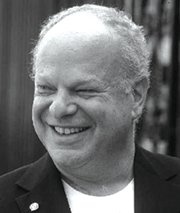
The rest of us may take the question, with its obvious answer, as a rhetorical slap in such faces. Of course one would expect psychologists to go further and show just what is worth calling "happiness" and just how it is good; but they haven't. In the past, that's been the job of philosophers, who disagree completely about that as about all other questions. Psychologists, on the other hand, naturally concern themselves with problem people, not happy people; the literature corresponds. To most of them, happiness has not seemed worth studying in depth; when there are no problems to be solved, nobody gets paid to help solve problems. Concern for the secrets of happiness is left to pop writers passing themselves off as spiritual gurus whose perceived triviality grates all the more because it is so lucrative. But like the other prejudices of the mental-health profession, which is no longer ruled by Freudian or any other orthodoxy, that one is under increasingly credible attack. The general leading the charge is Professor Martin Seligman of the University of Pennsylvania, whose "positive psychology" movement is gathering steam. (Hat tip to Kooky Abuelita for the link to the London Sunday Times article.)

Disclaimer: my interest is not entirely objective. During my first year as a philosophy grad student at Penn (1980-81), I earned my keep by acting as "administrative fellow" for one of that campus' then-experimental "college houses," Van Pelt, where students lived with a few faculty who provided cultural enrichment and occasionally even moral guidance. The "faculty master" of that house was none other than Marty Seligman, then a rising star of his profession. Though I admired him for his brilliance and style, he and I did not have the coziest of relationships. I was a rather callow youth, and a tactlessly evangelical Catholic to boot, married to a salty older woman who was intimidated by nobody and didn't much care for him. None of that endeared me to him. We did our respective jobs and that was that. I never realized how pertinent his already-famous theory of "learned helplessness" would be to my recovery, twenty years later, from severe and chronic depression; nor of course did I or anybody else have any inkling that his interest in defining and promoting happiness had a sound scientific source in the research he had already been doing. But now that I think about it as a philosopher heavily influenced by Aristotle and Aquinas, Seligman's approach is as natural as can be. My personal interest in the matter has nothing to do with that.

In general, the bad can only be understood against the background of the good. Evil, understood as what is objectively undesirable either morally or otherwise, has no existence except as a corruption or falling away from good, which is ontically if not conceptually primary. The good is what is objectively desirable, and a living being's nature can be understood in terms of what good(s) it characteristically desires and pursues. Happiness, I would venture to say, consists in the reliable satisfaction of desire for the objectively good (as distinct from what superficially but falsely seems good). The great thing about Seligman's theory—which I urge people to read about in the linked article and follow up—is that it gives some scientific account of happiness thus understood in the case of human beings.

Beyond that, what excites me about Seligman's refreshing approach is that he is successfully overcoming mountains of prejudice in his profession. Academics in general and psychologists in particular are predisposed to smell triviality in any happiness shtik if not outright charlatanism. But he goes doggedly on, spreading his new gospel around the world from its formal base at Penn, gaining millions in grant money, producing as well as collating testable results. Nobody can get away with laughing at him in public anymore. (Save for faculty lounges, to be sure; no academic reputation emerges from them unscathed.) Even the woman I date, who is studying for a counseling degree, waxed enthusiastic about him before she ever knew I had known him. This guy is for real. That he is not another Thomas Moore or Deepak Chopra only adds to his luster in my book; people of any religious tradition can benefit from heeding his work without diluting their own tradition. There's nothing to dislike here, at least not in principle.

I intend to study this in much greater depth, and I recommend that others who care do the same. It will help me improve my life, and might even make Marty willing to talk with me again!

Wednesday, October 26, 2005

The thin line dissolves

Having recovered from the shock of actually agreeing with an editorial in the National Catholic Reporter, I have begun to realize two things about the massive, and massively costly, sex scandal that the U.S. Catholic Church continues to wrestle with.

First, and as NCR says, "the sin must be named." The Church in this country will never recover credibility unless the full extent of the malfeasance and its causes are owned up to. The process is underway—but only through the bishops' gritted teeth, and only because the publicity, the subpoenas, and the damage awards have made some sort of serious response unavoidable. That isn't good enough. As yet there is no apparent collective awareness, among the bishops or those who work under them, that a far more radical housecleaning is in order. Great efforts are being made, as they should be, to weed out old pedophiles and screen out potential new ones; but it hasn't quite sunk in that the real problem is wider and remains rooted in the clerical club itself. Until that sinks in, the momentum of reform will be lost and the seeds of future scandal will be sown.

And that's where the difficulty of naming the sin looms very large. Sure, the scandal mushroomed because of how the bishops avoided accountability; one might therefore call that latter problem "imprudence." But why was accountability avoided? The bishops had a good, formal report on the pedophilia problem as early as 1985; they "received" it and proceeded to ignore it. Surely they should have known that they had a legal bomb ticking. They were even told as much by such whistleblowers as Tom Doyle. What made them think the problem would remain manageable if they conducted business as usual? What accounts for such denial?

Part of it, as I've said before, was the undue influence of homosexuality in the clergy. The vast majority of victims in the publicized cases were adolescent boys; and in one of his last speeches as President of the US Bishops' Conference early this year, Bishop Wilton Gregory acknowledged the ongoing challenge of "preventing the Catholic priesthood from becoming a gay profession." In the last few years, more than a handful of bishops have got into serious trouble for their own homosexual liaisons, though thankfully none of the objects of their affections were under the age of legal consent. Yet at least two of those bishops were clearly forced to resign. And the dozen or so cases we know about are only the ones we know about. So long as homosexuals constitute quite a substantial percentage of Catholic priests—the estimates range between 25 and 60 percent—there will be too much winking and nodding at sodomy in the seminary and beyond. It's only human, after all, and the problem is not about to go away.

Another, equally weighty reason why the scandal developed as it did was what I can only call a false sense of entitlement. Bishops are the authorities in the Church and are directly responsible for her welfare both individually and collectively. They are of course concerned to protect the Church's reputation, with which their own as individuals are closely bound up; and in countries where there is religious freedom, bishops and clergy have usually been given much more benefit of the doubt by civil authorities than the ordinary man gets. Nor must we forget the "seal of the confessional." Given all that, it was and is too easy for bishops to handle privately what would be publicly prosecuted as crimes in most other settings. Couple that with the "therapization" of our culture than began in the 1970s, and it was almost natural for bishops to think themselves entitled to deal with the problem of pedophile and other sexually erring priests more as matters for the confessional and the couch than for the DA.

But in view of the gravity of what was happening, such a sense of entitlement was false. That it persisted for so long is to be explained by the cocoon atmosphere of the club—in this case, the clerical club. The comraderie understandably forged by being collectively "set apart" as sacred, special people, looked up to by the lowly laity, is reinforced and twisted if you and many of your professional buddies are gay. And I'm convinced that many of those bishops didn't want to sacrifice priests for the welfare of the victims and the Church not only because priests were getting hard to come by but also because they never had to sacrifice anything important—such as marriage and family, which they did not desire and therefore could not sacrifice—in order to become priests themselves. Catered to by servants, enjoying fine meals and big fancy houses, they didn't know the meaning of sacrifice anywhere near as well as any ordinary parent does. It was an all-too-charmed existence for too many. It was not to last. The thin line between privilege and irresponsibility dissolved.

But even all that is merely symptomatic: it does not identify the core of the problem. The core of the problem was that there was no moral core. Spiritually speaking, there was no "there" there. The perks of their existence had made them morally vacuous, concerned more with protecting the status quo from which they benefited than with protecting the souls of their flock. They were hardly unique in that respect: many CEOs care more about their stock options than their employees, certainly more than their customers. But one ought to expect better of bishops even if, in this cynical age, that is considered naïve.

The solution is not necessarily what NCR urges: another blue-ribbon commission to study the problems and make recommendations. However good the process and the product, any such undertaking can be ignored after it is ritually praised. The bishops are still very good at that sort of thing. Beyond all bureaucratic mechanisms, the solution is for bishops to do what all Christians are called to do, and begin to do, in baptism: conform themselves with the crucified Christ by dying to the old self. It should truly be said of each and every bishop what St. Paul said of himself: "It is no longer I who live, but Christ who lives in me." Such an ideal is probably unattainable for many in this vale of tears; but a crucial step forward will have been made if the bishops understand what the ideal entails for them, value it above self-preservation, and strive accordingly. Only if the bishops as a whole take that step will the Church in this country be worth anybody else's taking seriously again.

New articles...well, old ones better posted

Over the past month, several readers have informed me that they had been unable to access several articles of mine via the links in the sidebar. They are stored under my MSN Passport account but even giving people Passports didn't help. So I've created three new blogs, each consisting of one iof those articles. You can access them by clicking the old links under "ARTICLES OF MINE" in the sidebar on this blog. (The article on Aquinas is at The Thomist's readily accessible site.)

Comments are allowed and encouraged.